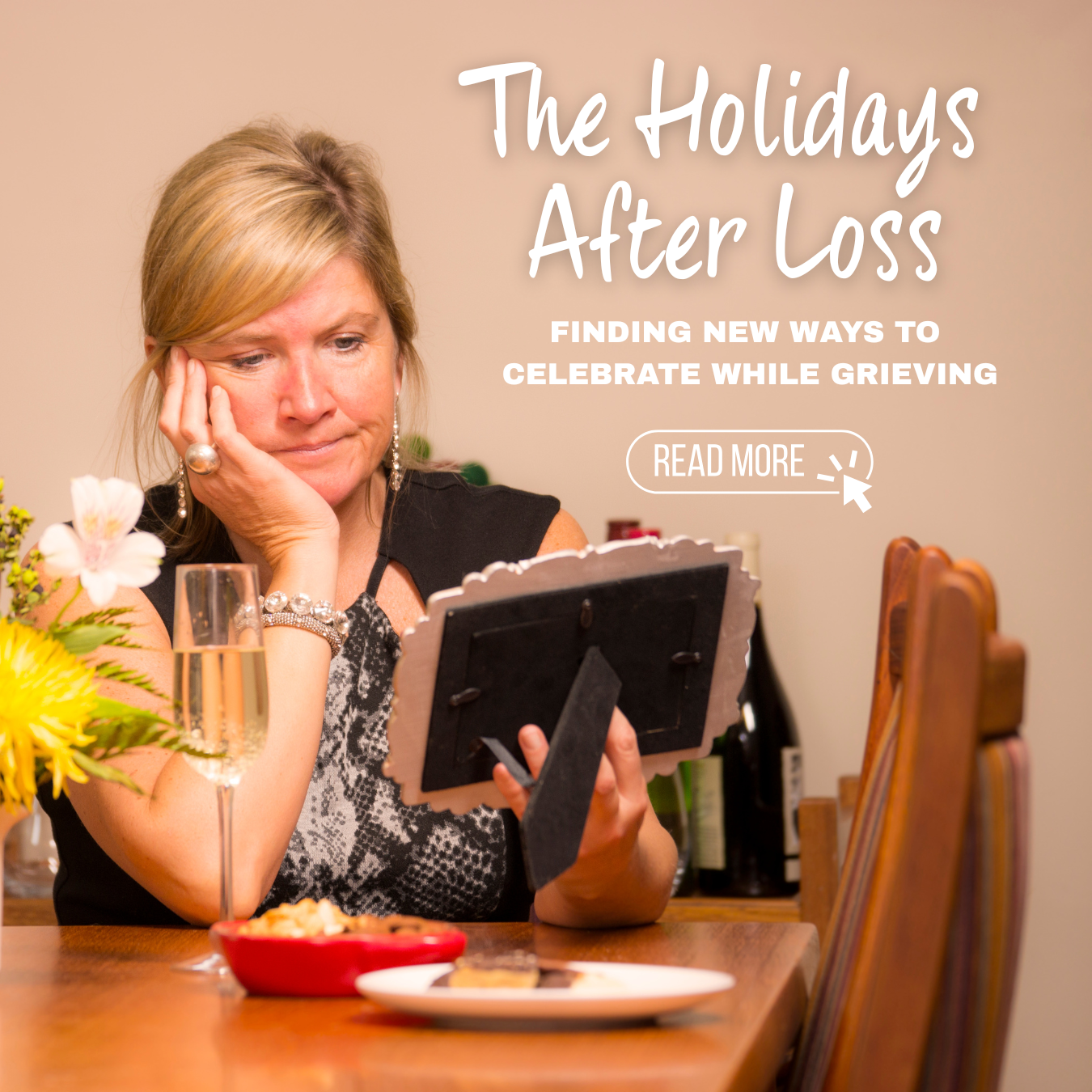
The holidays are often a time for family and celebration. But when someone you love is missing, any holiday can bring a complicated mix of emotions.
You might look forward to certain traditions while dreading others. You might find yourself laughing with family one moment and feeling overwhelmed by sadness the next. Perhaps it's your first holiday without someone you love, or maybe several years have passed, but their absence still feels particularly noticeable this time of year.
If you've experienced the loss of someone important to you, the holidays may look different than they once did. Familiar celebrations can bring back memories, and even the smallest reminders can make you feel the absence of someone you wish was still there.
If you're finding this time of year difficult, remember that you can make room for both grief and joy. You don't have to stop missing someone to enjoy the holidays, and you don't have to celebrate the way you always have.
There is no single right way to experience the holidays while grieving.
Why Grief Can Feel More Difficult During the Holidays
Grief can feel particularly noticeable during the holidays because so much is connected to memories and familiar routines.
Think about the traditions you share with the people you love. Perhaps someone always prepared the feast, organized family gatherings, decorated the house or made a particular holiday recipe. When that person is no longer there, even familiar activities can feel different.
Psychologist John Bowlby's attachment theory helps us understand why these experiences can be so powerful. Our relationships provide emotional security and a sense of belonging. When someone we love dies, we experience the loss of more than their physical presence. We also miss the role they played in our everyday lives.
This is one reason grief can resurface during meaningful occasions, even years after someone has died.
You might have adjusted to everyday life, but holidays bring back how things used to be. A familiar song, an empty chair at the dinner table or a family tradition can remind you of someone who is no longer there.
This doesn't mean you've gone backwards in your grief. It means that person remains an important part of your life and your memories.
Keeping Traditions and Giving Yourself Permission to Change
Traditions can be an important source of comfort when we're grieving. They connect us to familiar experiences and the people who helped create them.
For some families, continuing a loved one's traditions can be a meaningful way to remember them.
This connects to an idea in grief research called Continuing Bonds. Rather than suggesting that people must let go of someone who has died, this perspective recognizes that meaningful connections can continue through traditions and stories.
For example, you might:
Prepare a loved one's favourite meal.
Have a photo of them at a past event in a centralized place.
Share stories and memories during a family gathering.
Listen to music they enjoyed.
Continue a tradition they started.
Light a candle in their memory.
These moments can help keep someone's memory present in family celebrations.
However, continuing traditions doesn't mean you have to maintain everything exactly as it was.
Perhaps hosting dinner feels overwhelming without the person who always helped. Maybe you want to spend the holidays somewhere different or simplify your usual celebrations.
That's okay, too.
You can change traditions, create new ones or return to familiar activities when they feel right. Finding new ways to celebrate doesn't mean you're forgetting someone. It means you're allowing your traditions to grow alongside the changes in your life.
Navigating the Emotions That Come With Holiday Grief
One of the most difficult parts of grief is that emotions don't always arrive when we expect them.
You might feel okay while decorating for the holiday, only to become overwhelmed when you hear a familiar song. You might enjoy a family gathering and then feel sad when you return home.
You may even feel guilty for having a good time.
The Dual Process Model of coping with bereavement, developed by researchers Margaret Stroebe and Henk Schut, helps explain these experiences.
The model describes how people naturally move between two types of coping:
Loss-oriented coping: Focusing on the person who died, remembering them, acknowledging their absence and experiencing the emotions associated with loss.
Restoration-oriented coping: Adjusting to changes, participating in everyday activities, taking on new responsibilities and finding ways to continue living.
During the holidays, you might move between these experiences several times in one day.
You could spend the morning remembering someone you love and the afternoon enjoying time with family. You might feel happy opening presents and sad when you realize someone is missing.
Moving between these experiences isn't a sign that you're avoiding grief or failing to heal. Taking a break from grief to participate in life can be part of adapting to loss.
It's also worth remembering that grief doesn't follow a predictable set of stages.
You may have heard of the five stages of grief associated with Elisabeth Kübler-Ross: denial, anger, bargaining, depression and acceptance. These concepts were originally developed through her work with people facing their own deaths. They were not intended as a fixed sequence that everyone must follow after someone dies.
You don't need to experience every emotion, reach acceptance by a certain time or move through grief in a particular order.
Give yourself permission to experience the holidays as they come.
If you need a quiet moment, take one. If you want to laugh, laugh. If you feel like celebrating, allow yourself to enjoy it without guilt.
When Everyone Gets Quiet: Grief and Loneliness
One of the unexpected challenges of experiencing a loss is how relationships with friends and family can change.
Sometimes, people don't reach out because they don't know what to say. They might worry about bringing up painful memories or assume that giving someone space is the best way to help.
Others may be experiencing grief themselves and struggling to find the words or emotional energy to support someone else.
Unfortunately, this silence can leave someone who is grieving feeling forgotten and isolated.
If someone you know has recently experienced a loss, don't wait for them to reach out first.
A simple message letting them know you're thinking about them can make a difference. Continue inviting them to family gatherings, even if you're unsure whether they'll attend. Let them decide what they feel comfortable doing.
If you're the person grieving, remember that it's okay to reach out, too. You don't have to explain everything you're feeling or pretend you're doing better than you are.
Sometimes connection doesn't require a big conversation. It might simply mean spending a little time together.
We also need to remember that grief can affect entire families and communities. Someone who seems distant may be struggling with their own loss or finding it difficult to know how to support others.
Making room for honest conversations and checking in with one another can help people feel less alone during a difficult season.
How to Support Someone Experiencing Grief During the Holidays
Here are a few ways to offer meaningful support:
Acknowledge their loss. Don't avoid mentioning the person who died because you're afraid of upsetting them. Sometimes knowing that someone else remembers their loved one can be comforting.
Continue inviting them. Let them know they're welcome to join family celebrations, but don't pressure them to attend.
Offer something specific. Instead of saying, "Let me know if you need anything," consider offering to bring dinner or help with holiday preparations.
Listen without trying to fix their feelings. You don't need to find a positive message or explain why things happen. Sometimes people simply need someone who is willing to listen.
Remember that grief doesn't have an expiry date. Someone may still struggle with holidays several years after their loss. Continue checking in, even when the loss is no longer recent.
Your patience, understanding and willingness to stay connected can mean more than you realize.
Finding Support When Grief Feels Overwhelming
Grief can feel isolating, especially during the holidays when family expectations and memories may bring difficult emotions to the surface.
Sometimes, talking with someone who understands can help. Connecting with others who have experienced loss can also remind you that you're not alone in what you're feeling.
The Elliot Lake Palliative Care Program offers grief and bereavement support to individuals who have experienced the death of someone close to them.
Their grief support groups provide an opportunity to connect with others and share experiences. Groups are kept small and personal, with a brief intake to help determine whether the group is a suitable fit.
These services are offered at no cost.
You don't have to wait until your grief feels overwhelming to reach out. Whether your loss is recent or happened several years ago, support is available.
To learn more about grief support or register your interest in an upcoming group, contact Elliot Lake Palliative Care Program.
Phone: 705-461-8882 ext. 2235
Email: palliative@sjgh.ca
Website: elpc.ca/grief-group
Services are available to people in Elliot Lake and surrounding North Shore communities within the program's service area.
You Can Make Room for Both Grief and Joy
The holidays may not look the way they once did, and that's okay.
You can remember someone while creating new traditions. You can miss someone deeply and still enjoy time with family. You can find happiness in new memories without feeling that you're leaving someone behind.
There is no right way to celebrate the holidays when you're grieving, and there is no timeline for when you should feel better.
Give yourself permission to make the holidays your own. Keep the traditions that bring comfort, change the ones that feel difficult and allow yourself to experience moments of joy without guilt.
And if the season feels particularly heavy, remember that you don't have to navigate grief alone.
Elliot Lake Palliative Care Program is here to help you find support, connection and comfort when you need it.